
How to Deploy Docker for Free on MS HOST
Easy, free deployment for Docker. Connect GitHub, follow this step-by-step guide, and go live in minutes on MS HOST. See also our deployment solution and FAQ for more help.
Deploying Docker shouldn't be complicated
Setting up servers, configuring build pipelines, and managing environment variables takes time away from building your product. MS HOST gives you a free, developer-first platform to deploy Docker applications from GitHub in minutes — no DevOps expertise required.
Why deploy Docker on MS HOST
Easy, free deployment
Connect your GitHub repo, select Docker, and deploy for free. MS HOST handles builds, hosting, and SSL automatically.
- No credit card required
- One-click GitHub integration
- Automatic HTTPS on every deploy
Built for modern workflows
Every push to your branch triggers an automatic build and deployment. Focus on code while MS HOST keeps your Docker app live.
- Continuous deployment from Git
- Live build logs in the dashboard
- Zero-downtime redeployments
Production-ready from day one
Environment variables, custom domains, and framework-specific defaults are configured for Docker out of the box.
- Secure environment variable management
- Framework-optimized build settings
- Instant rollback from the dashboard
Who uses MS HOST for deployment
Teams and solo developers ship Docker projects faster with free, reliable hosting.
Side projects and MVPs
Launch your Docker prototype for free and share a live URL with users or investors within minutes.
Production applications
Run real Docker workloads with automatic redeployments, environment secrets, and a dashboard to monitor every build.
Overview
Docker packages your application and dependencies into portable containers. MS HOST provides free container hosting with automatic builds from your Dockerfile. This guide explains how to connect GitHub, configure your container, and deploy with HTTPS on MS HOST.
Video Tutorial
Setup Requirements
A valid Dockerfile in your project
Properly configured listening port
A Docker project ready for production
Step-by-Step Deployment
Name Your Project
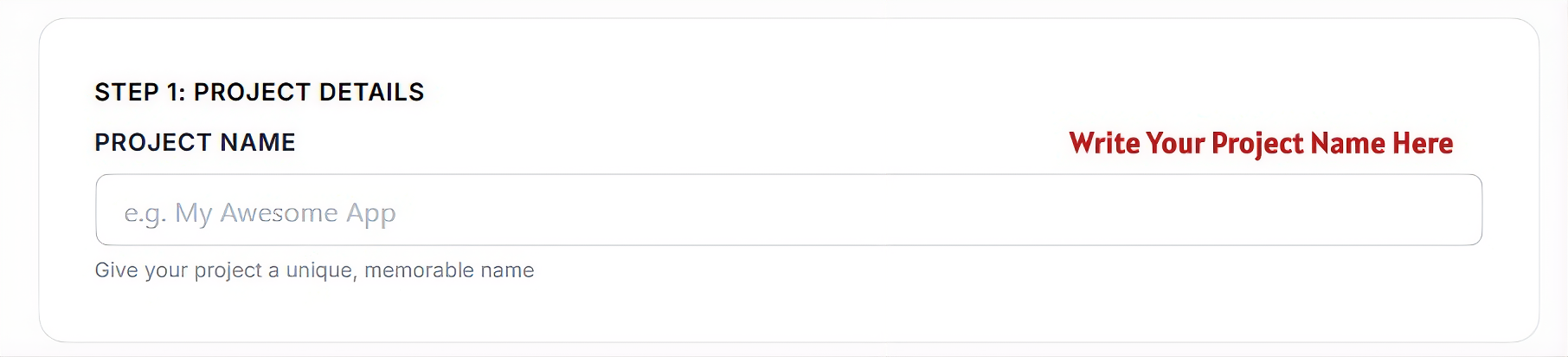
Choose a name for your Dockerized application.
Project Name
Enter a name for your project (e.g., 'Docker API'). This will be used to identify your project in the system.
The helper text below reminds you that each project must have a unique identity.
Connect Repository
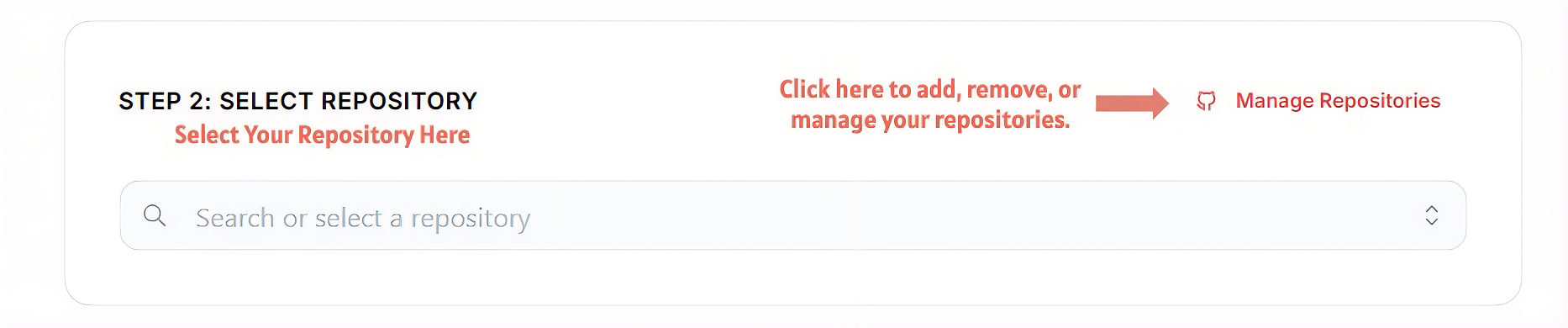
Connect your source code by selecting a GitHub repository.
Search or Select a Repository
Use the dropdown to locate your project. You can filter the results by typing the repository name.
Manage Repositories
If your Dockerized repository isn't visible, click 'Manage Repositories' to authorize MS HOST to access your projects.
Select Framework
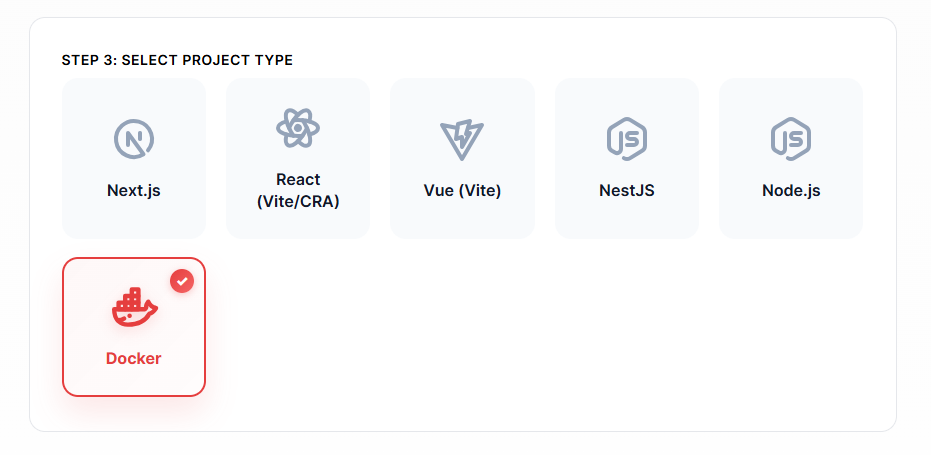
Select 'Docker' from the framework grid manually confirm the selection.
Docker
Click on the Docker card to select it. Once selected, a checkmark badge will appear, and MS HOST will prepare the environment for building and deploying your container image.
Configure & Deploy
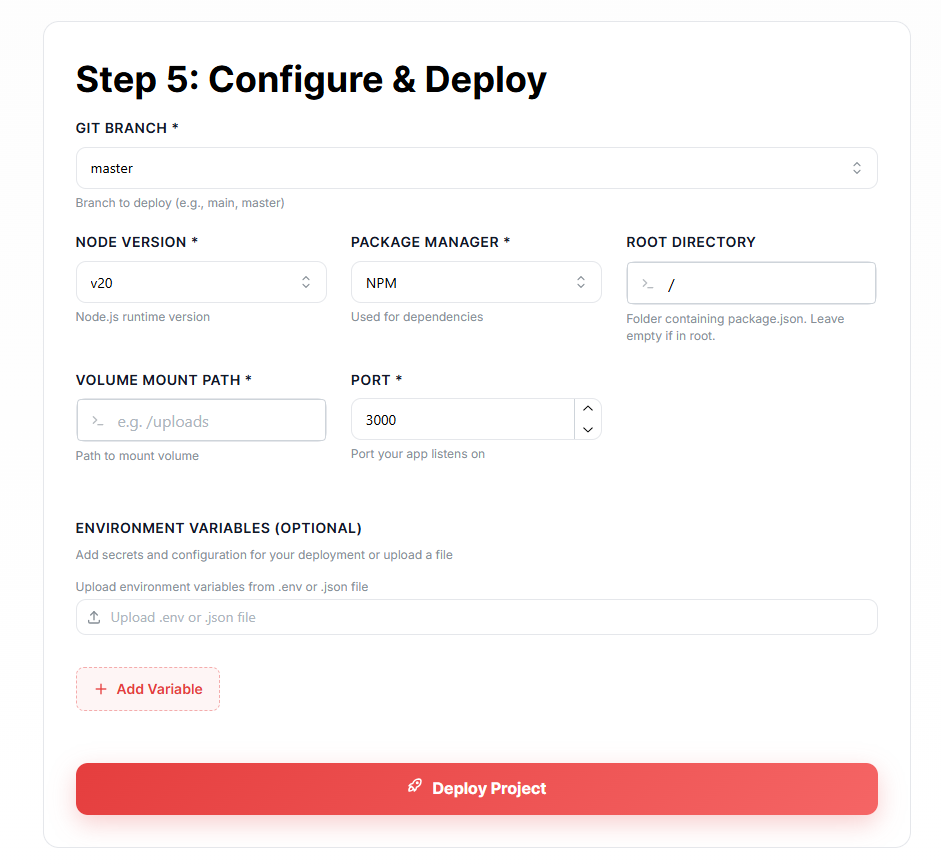
Review and customize your Docker build and runtime settings.
Git Branch
Select the branch to deploy. Every push to this branch will trigger an automatic redeployment.
Root Directory
Specify the folder containing your Dockerfile. Leave as '/' if it's in the repository root.
Port & Volume (Optional)
Configure exposed ports and volume mounts if your container requires persistent storage or specific network mappings.
Environment Variables (Optional)
Add secrets and configuration values (e.g., API_KEY, DB_URL) that your container needs at runtime. You can also upload a .env file.
Deploy Project
Click the red 'Deploy Project' button. MS HOST will build your Docker image and launch the container.
Project Dashboard Guide
Once your project is deployed, you land on the Dashboard. This central control panel provides real-time insights and management tools for your application.
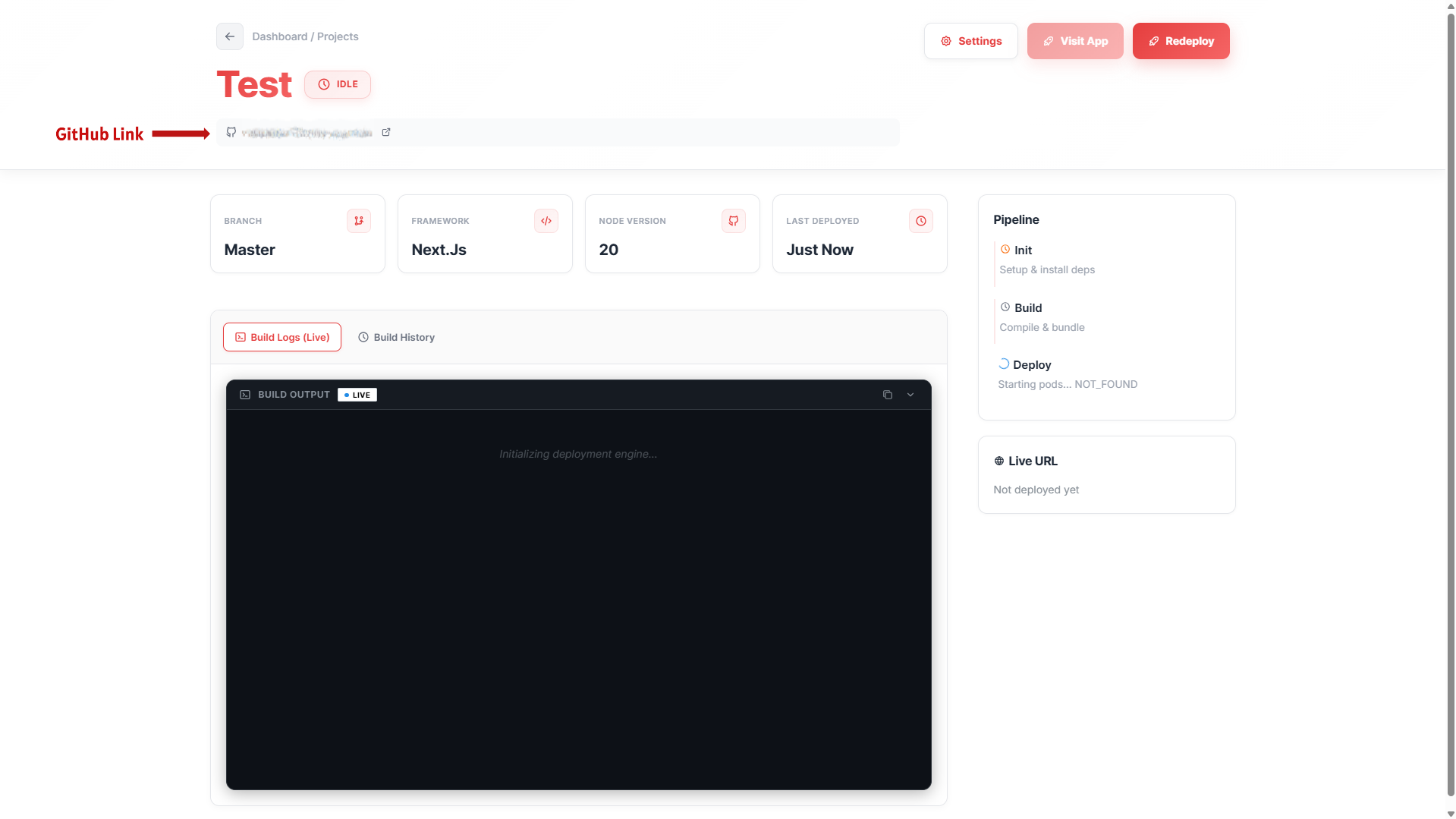
Project Name & Status
Located at the top-left, this displays your globally unique project name along with a real-time status badge (e.g., IDLE, BUILDING, LIVE, or ERROR) indicating the health of your application.
GitHub Link
Quickly access your source code. The dashboard provides a direct link to your connected GitHub repository and the specific branch currently being served.
Info Cards
Four dynamic cards give you a snapshot of your deployment: the active Branch, the selected Framework, the specific Node.js Version, and the precise time of the 'Last Deployed' successful build.
Build Logs (Live)
Watch your deployment in real-time. The integrated terminal streams live logs from our build engine, allowing you to monitor dependency installation and compilation as it happens.
Pipeline Status
Track the three critical stages of your app's journey: Init (setup & env prep), Build (source compilation), and Deploy (final orchestration and launch).
Live URL & Management
Once live, your production URL is displayed prominently. From the dashboard, you can also trigger a manual 'Redeploy' or access deep 'Settings' for advanced configurations.
Environment Variables
Manage your application secrets and configuration values. MS HOST provides a secure way to inject these into your runtime environment.
Adding Variables
Use the '+ Add Variable' button in the Configure or Settings screen to add secrets like API keys, database URIs, or internal flags manually.
Bulk Upload
Save time by uploading a `.env` or `.json` file. MS HOST will automatically parse the file and add all variables to your project in one click.
Security First
Never commit your `.env` files to GitHub. MS HOST securely encrypts all stored environment variables and injects them only during the build and runtime.
Automatic Deployment
Every change you push to your branch is automatically built and deployed. Focus on code, while we handle the distribution.
Push to Deploy
Every time you push code to your selected GitHub branch, MS HOST automatically triggers a fresh build and redeploys your application.
Zero Downtime
Our orchestration engine ensures your old version stays live until the new build is 100% healthy, providing a seamless transition with zero downtime.
Manual Redeploy
Need to trigger a build without a code push? Use the 'Redeploy' button on your dashboard to pull the latest code and rebuild immediately.
Updating Project Settings
Your project is not static. You can refine your configuration as your application grows.
Update Configuration
You can change your Node.js version, package manager, or build commands at any time from the 'Settings' tab on your project dashboard.
Project Scaling
As your project grows, you can adjust deployment resources and advanced platform settings from your project dashboard.
Tips & Common Mistakes
Optimize Your Dockerfile
Use small base images like `alpine` or `slim` versions and multi-stage builds to keep your final container image size small and deployment fast.
Handle Port Assignment
Ensure your application listens on the port defined in your MS HOST settings. Use `process.env.PORT` in your code to bind to the dynamically assigned port if applicable.
Volume Mounts
If your app requires persistent storage, use volume mounts. Note that data stored outside of configured volumes may be lost during redeployment.
Environment Variables
Docker containers on MS HOST have all configured environment variables available at runtime. No need to bake secrets into the image.
Base Directory
The 'Root Directory' setting in MS HOST determines where the Docker build command is executed. Ensure all files needed by your Dockerfile are within this directory.
Ready to deploy your Docker app?
Join developers using MS HOST for free, easy deployment. Connect GitHub and go live today.